Competitor Brand Bidding vs Ad Hijacking
Classify the behavior before choosing a complaint. A clear competitor ad, an affiliate contract breach, and a deceptive ad-hijacking path can appear on the same branded query but require different evidence and actions.
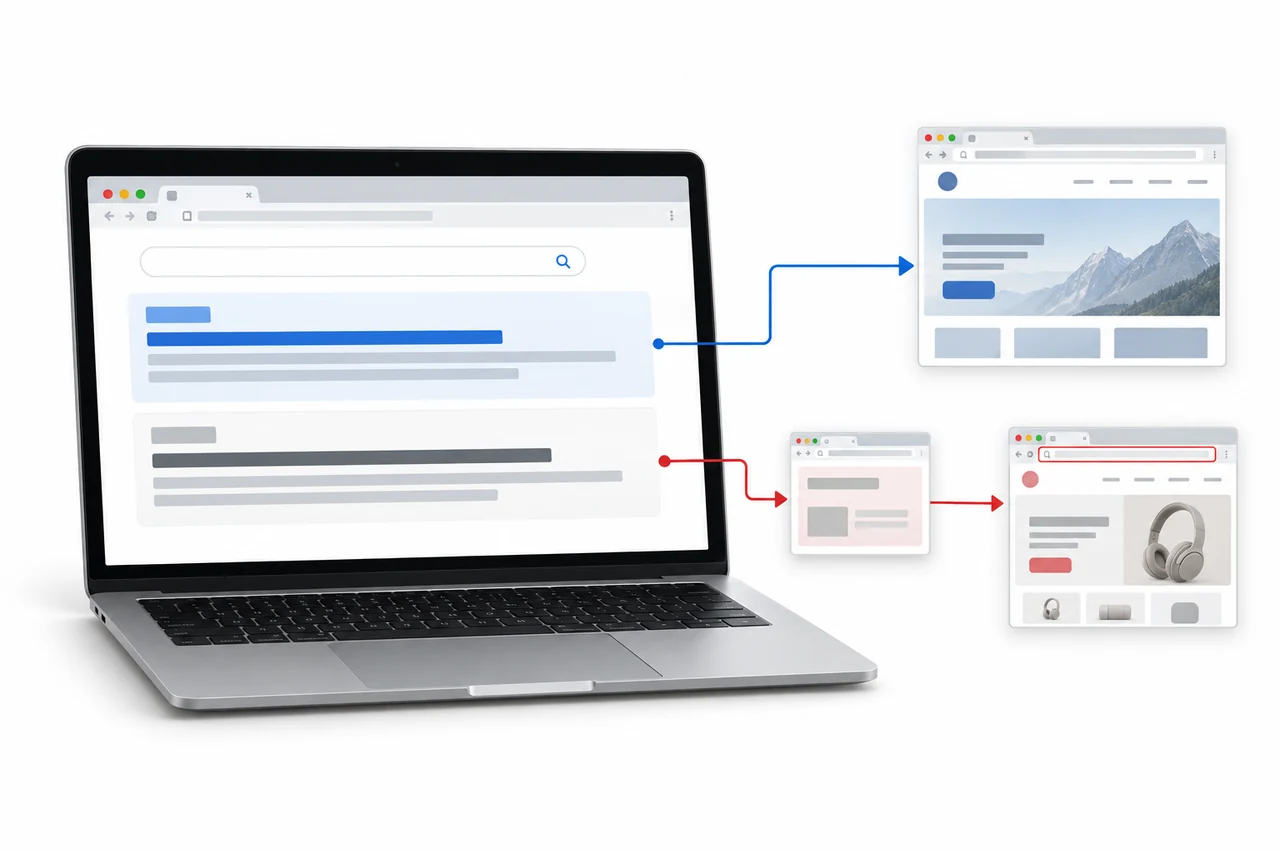
Independent advertiserA clear identity and a direct route to its own website.
Identity mismatchPreserve the intermediary and final destination before choosing a complaint.
Start With the Advertiser’s Observable Behavior

Clear competitor
The advertiser identifies itself, uses its own destination, and does not claim an affiliation that the evidence contradicts.

Relationship abuse
An affiliate or partner uses a prohibited query, ad, tracking, or attribution path covered by a documented agreement.

Deceptive identity
The ad or destination impersonates the brand, hides identity, presents a false affiliation, or uses cloaking to conceal the real route.
Separate Competition, Partner Abuse, and Ad Hijacking
The advertiser category alone does not decide the route. Compare identity, message, destination, relationship, and evidence of deception.
Own identity and destination, no supported false affiliation, and no verified partner relationship.
Verified affiliate or partner route that conflicts with a current agreement or program rule.
Confusing trademark use, false official status, copied offer, or another supported misleading representation.
Destination mismatch, impersonation, or evidence that the route changes to conceal prohibited behavior.
What Ordinary Competitor Bidding Can Look Like
A competitor may appear for a branded query without that appearance alone establishing a removable ad, a trademark-policy violation, or illegal conduct.
- The advertiser name and destination clearly identify the competing business.
- The ad does not present supported evidence of false affiliation or impersonation.
- The landing page promotes the competitor’s own offer and remains consistent with the ad.
- No verified affiliate or partner relationship creates a separate agreement route.
Google’s current trademark policy does not restrict trademarks as keywords. A legal conclusion may vary by jurisdiction and requires appropriate legal review.
Aggressive Brand Use Still Needs Context
An ad can be commercially aggressive without every element fitting the same enforcement route. Inspect the exact use of the mark, advertiser identity, comparative claim, reseller or informational role, destination, and market.

Trademark in ad text
Document where the mark appears and whether the advertiser is a direct competitor or uses it in a confusing, deceptive, or misleading way.

Reseller or information context
Review the complete current criteria rather than assuming that every reseller, compatible-product, or informational use is restricted.

Comparative or promotional claim
Preserve the exact statement, offer, pricing context, destination, and information available to the user before classifying the route.
Signals That Move the Case Toward Ad Hijacking

False identity
The ad or landing page presents the advertiser as the official brand, support team, authorized provider, or another unsupported affiliation.
Misleading offer
The ad copies a promotion, presents unavailable terms, or sends users to an offer that does not match the message.

Hidden destination
The visible identity and final destination differ, or the route varies in a way that may conceal prohibited behavior.

Recurring evasion
New advertisers, domains, or tracking paths repeat the documented behavior after an earlier action.
Review the Ad and Its Destination
Share the query, market, ad text, visible URL, and destination. AdFlagger can review whether the evidence points to ordinary bidding, partner abuse, misleading use, or a possible ad-hijacking route.
Classify This AdAffiliate Abuse Is a Separate Enforcement Branch
A prohibited affiliate ad can divert branded demand and attach commission tracking without necessarily meeting the same criteria as a trademark complaint or impersonation case.
Connect the search observation to the affiliate identity, tracking route, applicable agreement clause, notice, correction, commission review, and recurrence. Use a platform-policy route only when the ad independently fits that policy.
Use the Route That Matches the Classification

Monitor and compare
Use when the ad appears competitive but there is not yet supported evidence for partner, platform-policy, or legal enforcement.
Partner enforcement
Use when a verified affiliate or partner route breaches a current promotion rule or agreement.

Platform or rights review
Use trademark, misrepresentation, destination, cloaking, or legal review when the observed facts fit the specific criteria.
Collect Only the Evidence the Chosen Route Needs
Every route starts with the query, market, device, timestamp, complete ad, visible URL, destination path, advertiser identity, and supporting basis. Add agreement, rights, or policy evidence only when it is relevant to the classification.
Measure confirmed unauthorized exposure, recurrence, and official-site clicks separately. Higher branded CPC or lower traffic can support investigation, but neither proves ad hijacking by itself.
Use the Ads Takedown Evidence Checklist for the detailed capture workflow.
Competitor Bidding and Ad Hijacking Questions
Policies Behind the Classification
Use the current Google Ads Trademarks policy to distinguish keyword bidding from reviewed trademark use, the Misrepresentation policy for false affiliation and impersonation concerns, and the Circumventing Systems policy for evidence of cloaking. For the partner branch, see how to stop affiliate brand bidding. Legal conclusions require advice for the relevant jurisdiction.
Business case studies
Real results from brands that took back control of their traffic
If Pirate Sites Ranked at #2 to #6, How Much Could They Take?
- ≈ 19Potential customers diverted per month
- ≈ $7.3kPotential monthly revenue exposed
- 3 customersFee-equivalent value in this case

STARS PARTNERS: a Branded-Search Case for One Brand
- +101.6%Visits, calculated from rounded values
- +31.5%Unique visitors, calculated from rounded values
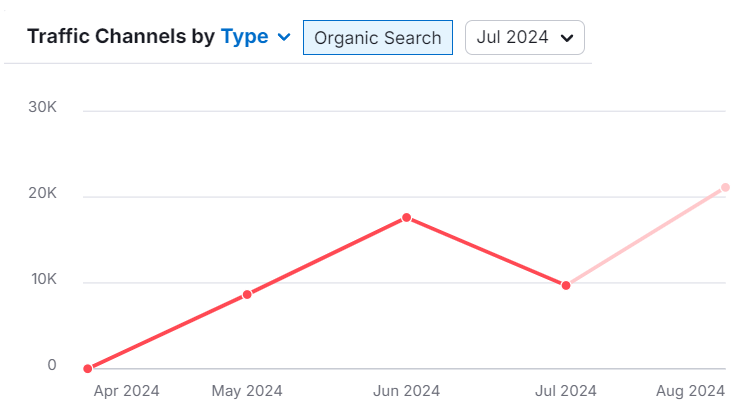
- +75.8%Organic Traffic Growth
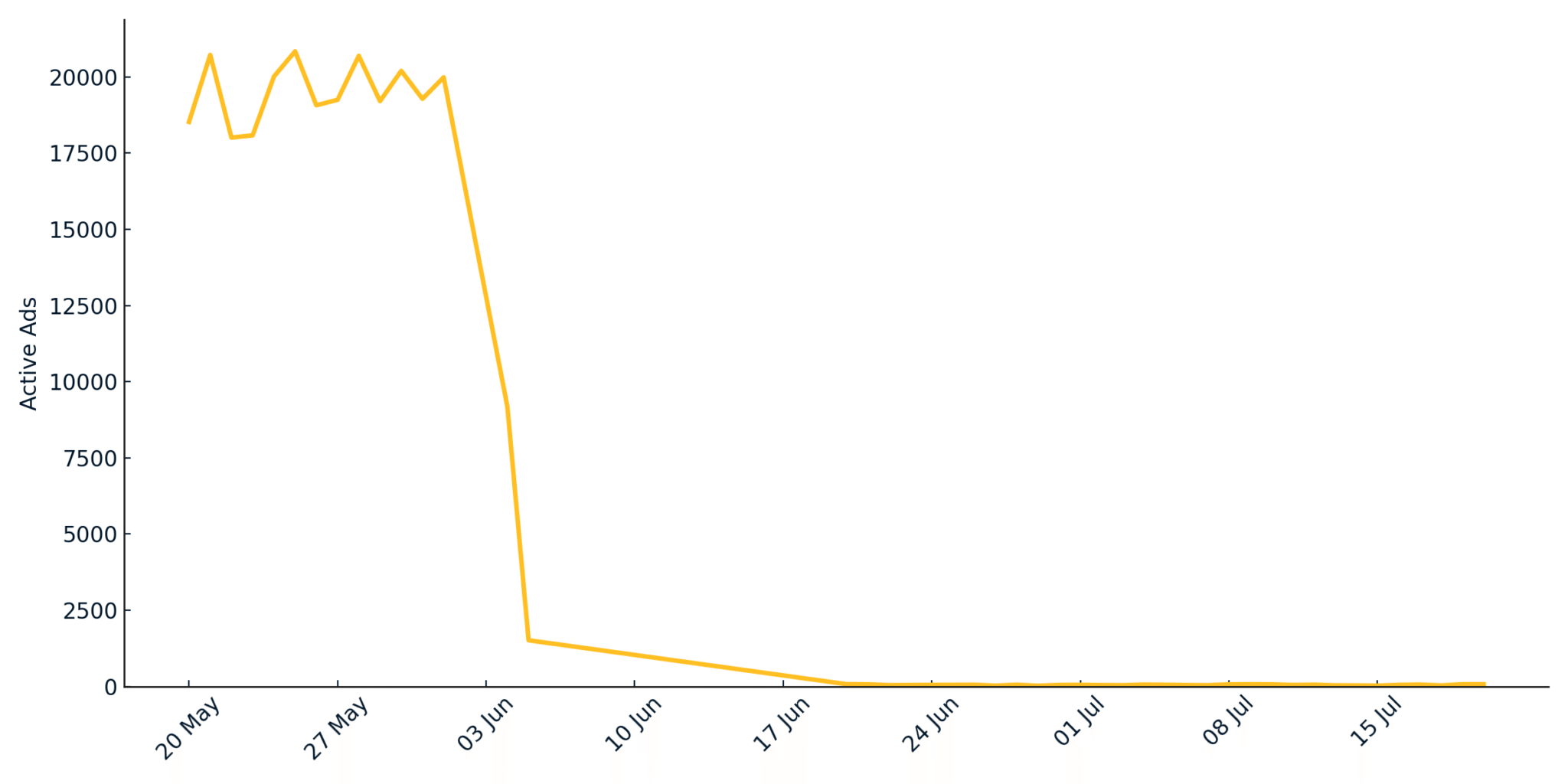
How RocketPlay Cut Ad Hijacking in 4 Weeks
- by 20.2%Boosted Organic Traffic
- 350Ad Hijacking Domains Remove
- $20 → $2CPC Slashed