
What Is Brand Bidding?
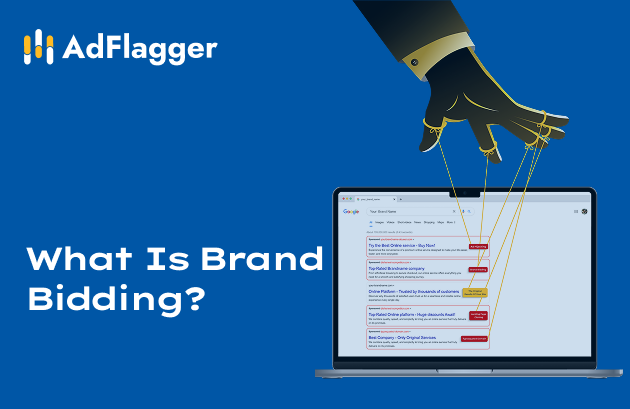
Brand bidding is the practice of targeting paid-search ads to queries that contain a company, product, or trademark name. The advertiser may be the brand itself, an authorized partner, a reseller, a comparison service, an affiliate, a competitor, or an impersonator.
Brand bidding is not automatically prohibited. The business risk appears when paid results confuse customers, violate partner terms, capture existing demand, use misleading trademark presentation, redirect through hidden journeys, or send branded traffic away from the official website.
Who Can Bid on a Brand Name?
The brand
Protects visibility, controls messaging, and captures high-intent searches through its own account.
Authorized partners
Affiliates, resellers, agencies, or local partners may have defined permissions and restrictions.
Competitors
May target brand queries, but ad presentation and trademark use still require careful classification.
Unauthorized actors
Impersonators, restricted affiliates, fake support sites, cloaked redirects, and misleading advertisers.
The same keyword can produce very different cases. Actionability depends on who is advertising, what the ad says, where it leads, whether the actor is authorized, and which rule or right applies.
How Brand Bidding Diverts Existing Demand
Paid click displacement
An unauthorized result appears above the official website and captures a customer already searching for the brand.
Commission interception
An affiliate attaches tracking and receives payment for a journey that might otherwise have converted directly.
Higher auction pressure
Additional advertisers can increase competition around branded queries, although CPC movement alone does not prove abuse.
Customer confusion
Official-looking copy, business names, display URLs, or lookalike domains blur the identity of the advertiser.
Support and login diversion
Ads capture users looking for account access, customer service, bonuses, pricing, or a known product.
Attribution distortion
Owned demand is reclassified as affiliate, referral, paid, or partner-acquired traffic.
Is Competitor Brand Bidding Allowed?
There is no universal yes-or-no answer. Google’s trademark policy states that it generally does not restrict using trademarks as keywords. It may restrict trademark use in ad text when a complaint is valid and the use is confusing, deceptive, misleading, or otherwise outside the allowed categories.
Seeing a competitor on a branded query does not by itself prove a policy violation. The ad, advertiser, landing page, trademark use, market, and complaint basis matter.
Direct competitor trademark use, misleading identity, and unclear reseller or informational status can change the assessment.
A partner may violate program terms even where the platform permits keyword bidding. Contract evidence and authorization are central.
Fake identity, lookalike destinations, hidden redirects, or evasion can implicate additional platform and domain-enforcement routes.
Primary reference: Google Ads trademark policy.
How to Assess a Brand-Bidding Result
A screenshot is a starting point. The defensible record connects the search impression to the advertiser, commercial relationship, destination, authorization status, and the specific basis for action.
Map Who Is Buying Your Brand Name
Bring a branded query, suspicious advertiser, affiliate, market, or redirect. We will help distinguish legitimate activity from traffic interception and define the next step.
Monitoring and Enforcement by Actor Type
Authorized affiliate
Check approved keywords, geographies, negative-keyword duties, copy, landing pages, and sub-affiliate rules.
Unauthorized affiliate
Preserve attribution identifiers and connect the ad journey to the relevant partner agreement.
Competitor
Separate permitted keyword targeting from restricted trademark presentation, deception, or other policy issues.
Reseller or information site
Review whether the ad and landing page clearly identify the advertiser’s role and commercial offer.
Impersonator
Coordinate ad evidence with domain, hosting, registrar, trademark, fraud, or other applicable routes.
Recurring advertiser
Monitor replacement accounts, domains, copy, redirects, schedules, devices, and markets after action.
Use the Guide That Matches the Task
- Affiliate brand bidding and commission hijacking: how existing demand becomes paid affiliate attribution.
- How to stop affiliate brand bidding: operational enforcement workflow.
- Competitor brand bidding vs ad hijacking: classification boundary.
- Casino brand bidding: industry-specific market and affiliate risks.