
Detect GEO-Targeted Ad Hijacking
A headquarters desktop search covers only one set of conditions. Customers in another market, on another device or at another time may see a different ad. Use repeated observations across the conditions that matter to your customers.
Keep the query constant, record the location method and browser context, then preserve the complete ad and destination path. Check advertiser identity and authorization before classifying the conduct or choosing an action.
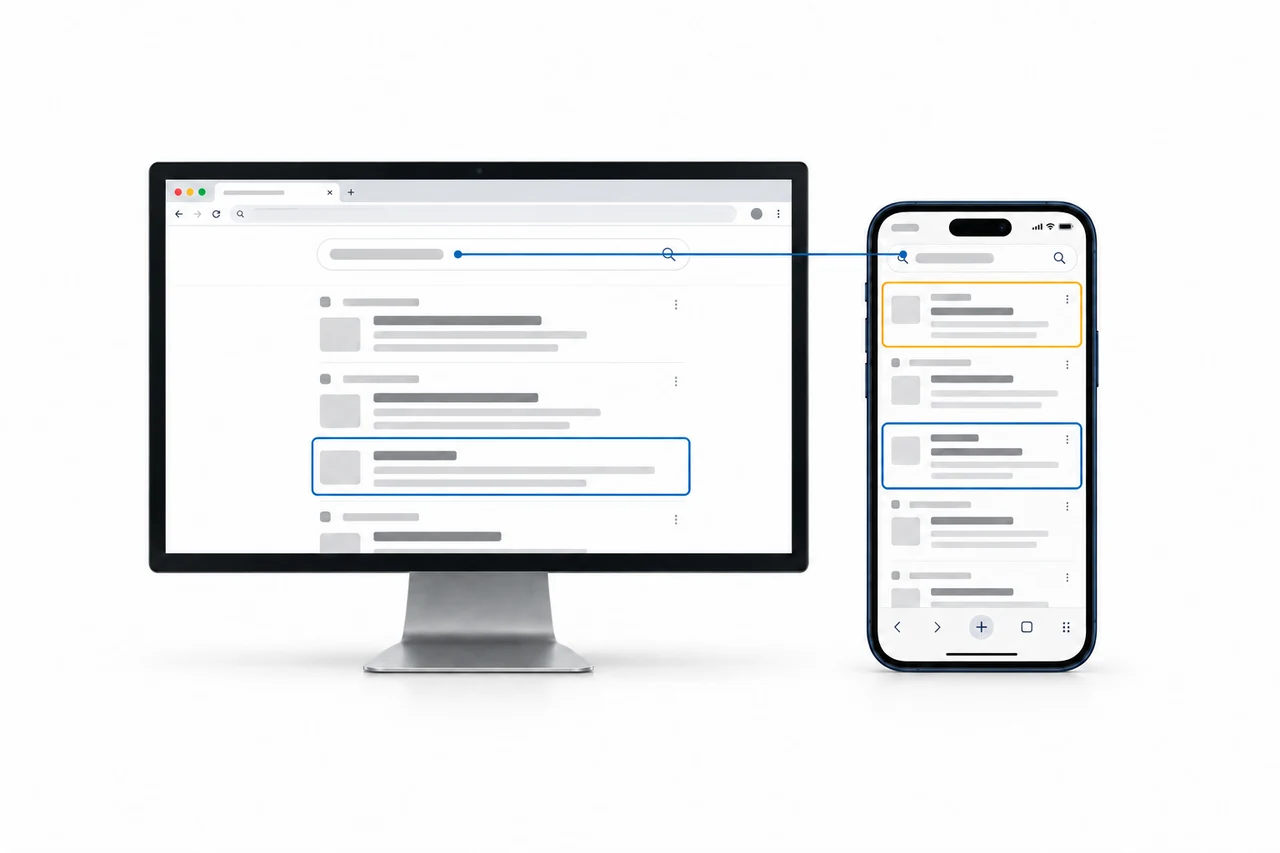
Control observationA desktop search records one set of conditions.
Customer conditionsCompare relevant markets and devices, then repeat the check.

Prioritize the locations, languages and device types where customers search for your brand.

Record the exact query and session context. A different result needs its own preserved observation.

Recheck the original window to distinguish recurring exposure from one impression or ordinary ad rotation.

Location selection
The campaign may include countries, cities, radiuses, locations of interest, or other geographic settings that exclude the investigator’s normal location.
Device and audience
Mobile-only bidding, device adjustments, prior-site visits, audience signals, signed-in state, or browser context can change who sees the ad.
Schedule and budget
The ad may appear only at night, on weekends, after the official campaign reaches a cap, or during a narrow promotion or support window.
Language and query form
Local spelling, transliteration, brand-plus-login, brand-plus-support, product terms, and exact language settings can expose different auctions.
Separate core brand, login, support, product, promo, and high-value transactional terms.
Choose countries, cities, languages, and customer locations from revenue and risk rather than convenience.
Observe desktop and mobile, key schedules, clean sessions, and relevant browser or audience states.
Capture the full ad, timestamp, market, device, click path, redirects, and final destination safely.
Use control observations and repeated windows to identify recurrence instead of treating one impression as a trend.
Location context
Record the observed market and the method used. Google says location may be inferred from IP, device, settings, behavior, and locations of interest, so avoid claiming exact targeting logic without account evidence.

Auction pattern
Auction Insights can show overlap, position-above, impression share, and top-of-page patterns in auctions where the official account participated. It does not determine authorization or deception.

Ad presentation
The business name, headline, assets, disclosures, displayed URL, and adjacent official result show what the searcher saw. Preserve the complete unit, not a cropped headline.
User-view evidence

Destination and authorization
Redirects, final domain, operator, offer, affiliate parameters, agreement terms, approved markets, and negative-keyword duties determine the appropriate enforcement route.
Route evidence
Complaint volume is not the outcome. Use the same monitored query-market-device matrix before and after action, track verified unauthorized exposure, and test whether more official-site clicks recover. Website impressions remain contextual; the core commercial result is branded traffic reaching the intended destination.
Preserve the complete ad, advertiser, redirect chain and destination. Check authorization before counting it as unauthorized exposure.
Retain the control conditions. This observation covers that check, not every market, schedule or customer device.
Repeat the stored conditions. Compare continuing exposure and replacement behavior against the same observation matrix.
Check official-site clicks separately. Use matched Search Console query, country and device filters. Record other campaign changes; impressions provide exposure context.
Share of controlled observations containing a verified unauthorized ad.
Change in branded clicks reaching the official website in the same segment.
How quickly the actor returns in the same or a replacement geography.
Share of observed branded journeys ending at an official or authorized destination.
Query, market, language, device, timestamp, schedule, browser state, and the method used to establish location context.
Advertiser or business name, headlines, descriptions, assets, disclosures, position, displayed URL, and adjacent result.

Initial URL, tracking parameters, redirects, intermediate domains, cloaking differences, consent pages, and final response.
Legal entity, contact details, offer owner, support number, forms, payment recipient, and claimed affiliation.

Affiliate or reseller status, permitted markets, schedules, devices, copy, keywords, trademark terms, and termination date.

Control observations, recurrence, related advertisers, new domains, copy variants, and the same conduct in adjacent markets.
Review the query matrix, location context, device, schedule, advertiser, redirect path, authorization, and recurrence before the evidence disappears.
Observe
Run controlled checks across the priority query, market, device, language, and schedule matrix.

Preserve
Capture the complete impression and user journey with enough context for another reviewer to reproduce it.

Route
Choose trademark, misrepresentation, destination, affiliate-contract, domain, or another evidence-led action.
Verify
Confirm reduction across the original segment and watch for replacement accounts, domains, schedules, and markets.
Supported conclusion
- Names the exact observation conditions.
- Shows repeated exposure and relevant control checks.
- Preserves the full ad and destination journey.
- Confirms advertiser identity and authorization scope.
- Separates verified facts from targeting inference.
Unsupported conclusion
- Assumes one clean HQ search proves absence.
- Treats one impression as proof of exact geo settings.
- Uses a cropped screenshot without time or market.
- Labels every advertiser unauthorized without checking.
- Measures success only by complaints submitted.
Check Geo-Targeted Ad Hijacking